
Connecting the Eurohaptics Community to the Global Roadmap for Interoperability
Despite significant advances in rendering and device design, large-scale deployment remains limited by a lack of interoperability. Currently, haptic research often exists in "silos," with content trapped within specific hardware or proprietary pipelines.
This workshop is the core forum at Eurohaptics 2026 for academic, industrial, and national stakeholders to align. We provide the first direct link between Eurohaptics researchers and the architects of MPEG and IEEE standards, ensuring your research contributions effectively support the interoperable systems of tomorrow.
Why this workshop is essential for the Eurohaptics community.
Master the structure of recent standards (ISO/IEC 23090-31 and IEEE 1918.1.1) to align your future research with global coding frameworks.
Witness implementation experiences from industry leaders, moving your prototypes from "lab curiosities" to scalable market solutions.
Voice your research priorities directly to standards bodies to influence the next generation of haptic communication roadmaps.
Submission and notification timeline for potential contributors.
Experience a deep dive into the future of haptic technology.
Goals, scope, logistics.
Two-part overview of recent haptics standards (MPEG and IEEE Introductions).
1-minute Elevator Pitch.
(conference schedule).
Interactive presentations of systems, tools, and research contributions.
Deployment experiences and integration challenges with discussion on Standardization and Future of Haptics Ecosystems.
Synthesis and next steps.
Experience standard-aligned interactions in person.

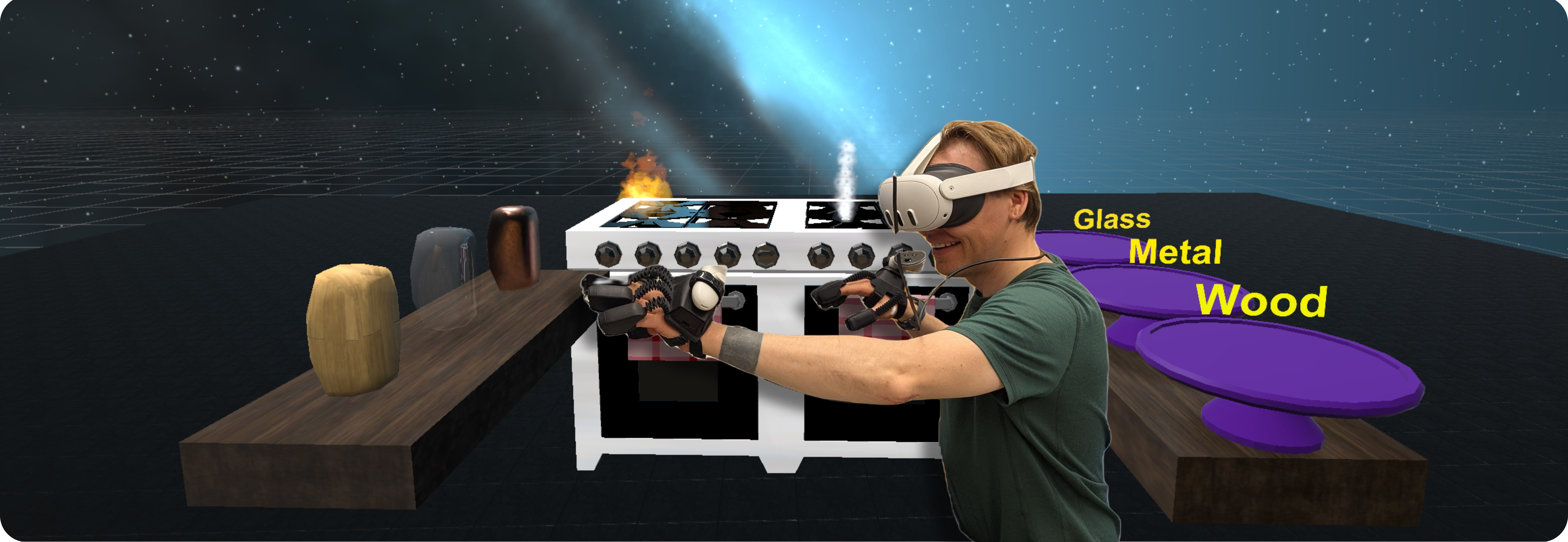
Traditional VR thermal feedback is static and immersion-breaking. This demo showcases an entropy-driven conductivity model aligned with descriptive standards. Experience realistic, material-specific thermal signatures (Glass, Metal, Wood) that respond dynamically to user interaction.

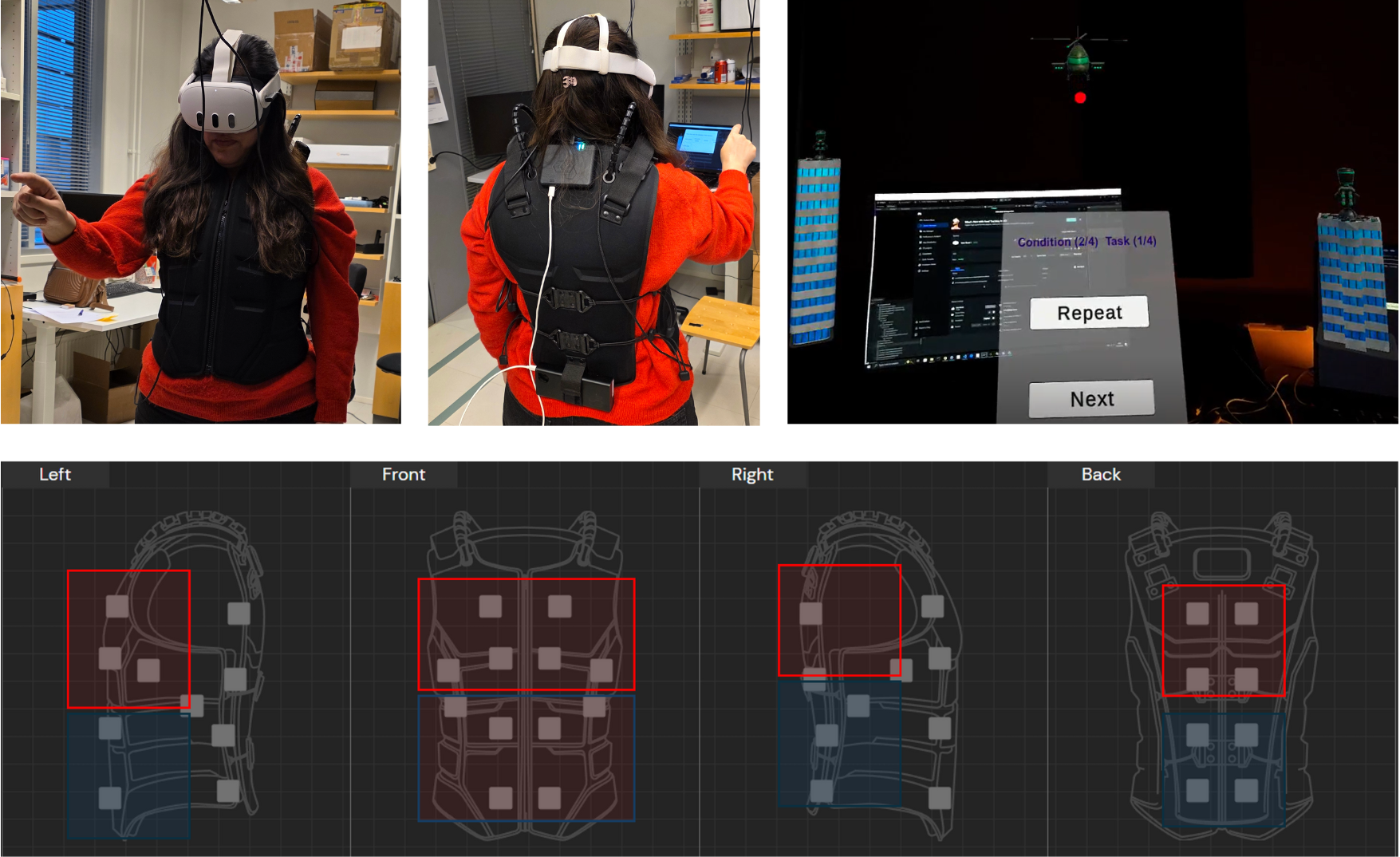
Dense immersive environments often lead to "haptic noise." This demo showcases MPEG-I prioritization techniques, which ensure that in a complex 360° environment, only the most relevant haptic feedback reaches the user, enhancing spatial clarity and interaction meaningfulness.

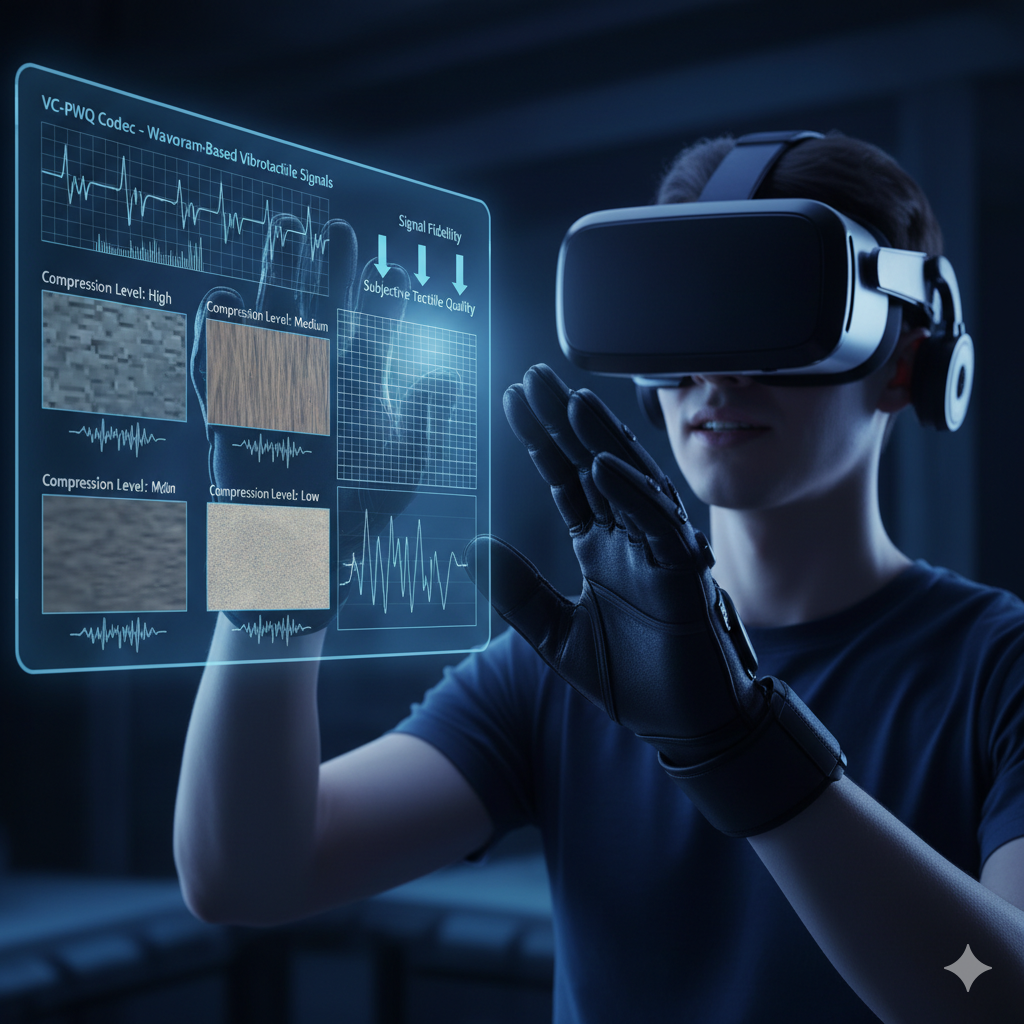
The demonstration involves a surface texture exploration task in a virtual environment with realistic vibrotactile feedback. The architecture adopts the VC-PWQ codec for waveform-based vibrotactile signals. The setup showcases how different levels of compression affect signal fidelity and subjective quality of tactile experience.

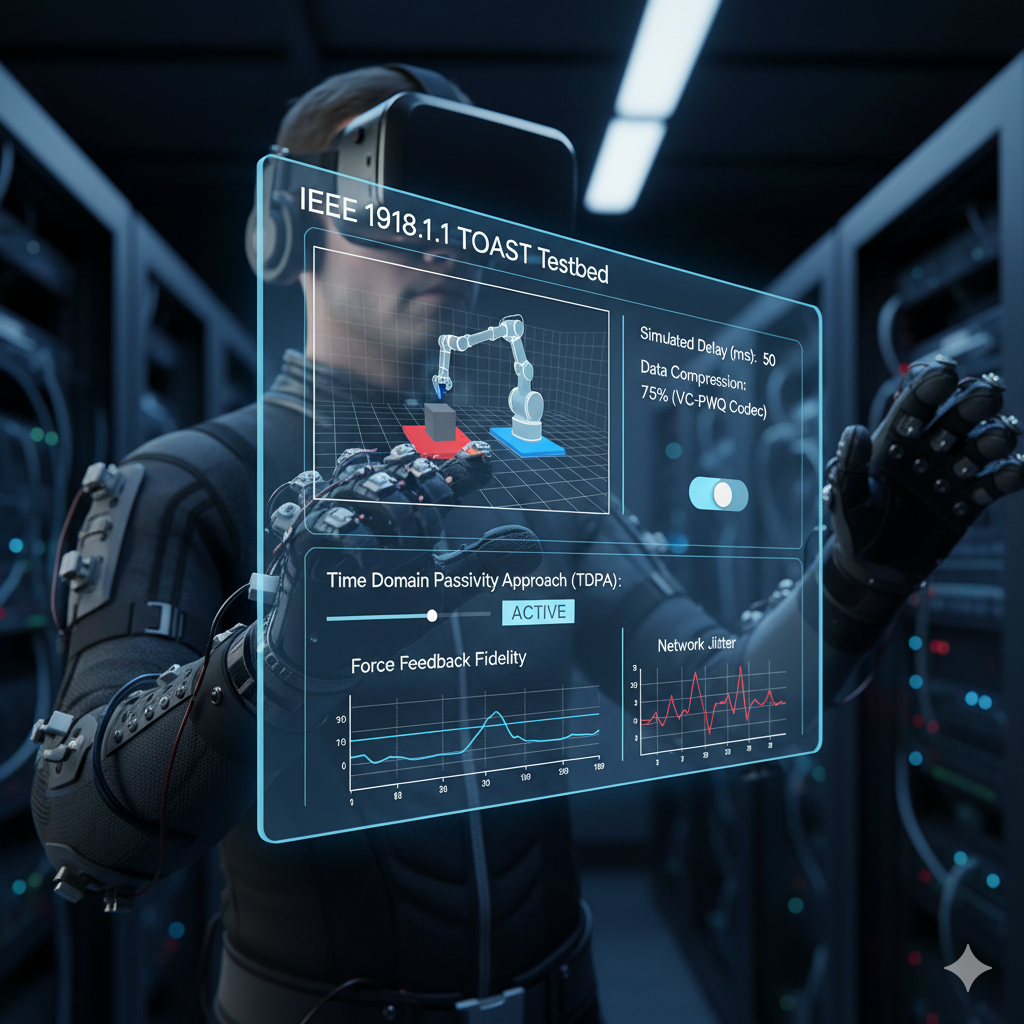
The TOAST testbed will show the capabilities of the IEEE 1918.1.1 standard through a pick-and-place task in a virtual environment, with control over simulated delay, amount of compression, and the application of the Time Domain Passivity Approach (TDPA).

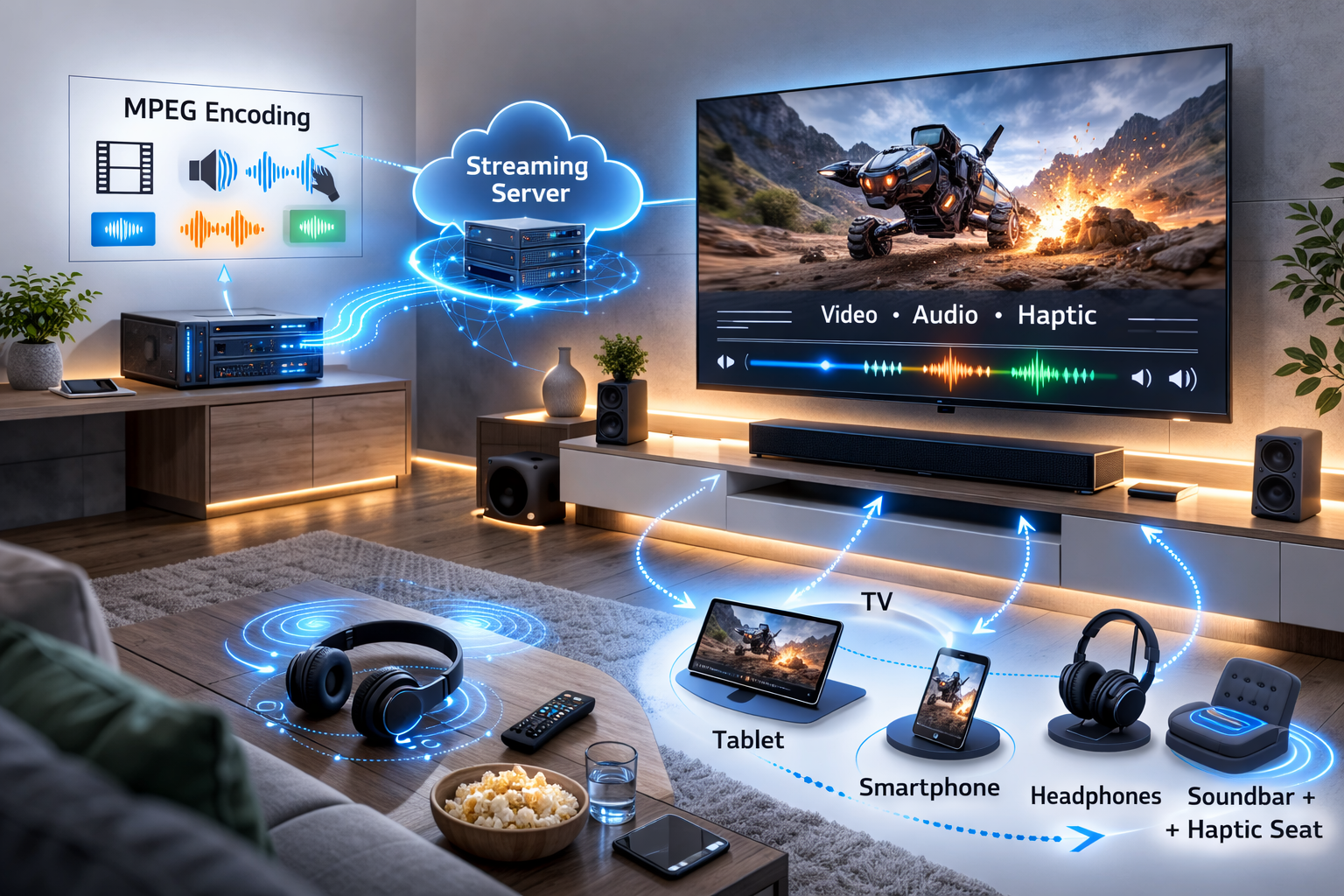
This demo presents a lightweight MPEG haptics streaming player that packages haptic effects together with conventional audio-video content into a DASH-compatible experience, then plays them back in sync through a simple cross-platform interface. It leverages several haptics-related MPEG specifications, including ISO/IEC 23090 Parts 31, 32, 33, and 37, to illustrate how standardized haptic representations, metadata, and streaming mechanisms can be integrated into practical media workflows from content preparation and packaging to interoperable playback. The demo is intended to highlight the value of standards-based, open tooling for making immersive haptic media easier to evaluate, deploy, and adopt across both research and industry contexts.
Core technical foundations for the next generation of haptic exchange.
The two haptic codec standards are both designed to enable the exchange of haptic data, but with differing focus and capabilities: The ISO/IEC 23090-31 standard provides both descriptive and waveform based coding approaches for multi-modal haptic feedback. It facilitates the incorporation of haptics into the ISOBMFF, MPEG-DASH, and MPEG-I standards, making it easier for content creators as well as media/streaming content providers to incorporate haptics in a standardized manner and improve the overall user experience. The waveform-based approach is designed to perceptually encode vibrotactile signals, while the descriptive approach allows the coding of other haptic modalities as well, first and foremost kinesthetic and vibrotactile data. A human readable JSON format (.hjif) is used as an exchange format. This format can be compressed into a binary file format for distribution (.hmpg) or into a packetized bitstream for streaming purposes.
The IEEE 1918.1.1-2024 standard provides haptic codecs for the Tactile Internet enabling the interoperability of different haptic (kinesthetic and tactile) input and output devices. Such interoperability is necessary to achieve necessary market scale in the realization of Tactile Internet (TI) technologies, devices and applications. These codecs address TI application scenarios where the human is in the loop (i.e. teleoperation or remote touch applications) as well as scenarios that rely on machine remote control. The standard defines (perceptual) data reduction algorithms and schemes for both closed-loop (kinesthetic information exchange) and open-loop (tactile information exchange) communication. These codecs can be combined with stabilizing control and local communication architectures for time-delayed teleoperation. The standard also specifies mechanisms and protocols for the exchange of the capabilities (e.g. workspace, the number of degrees of freedom, amplitude range, temporal and spatial resolution, etc.) of the haptic devices.